
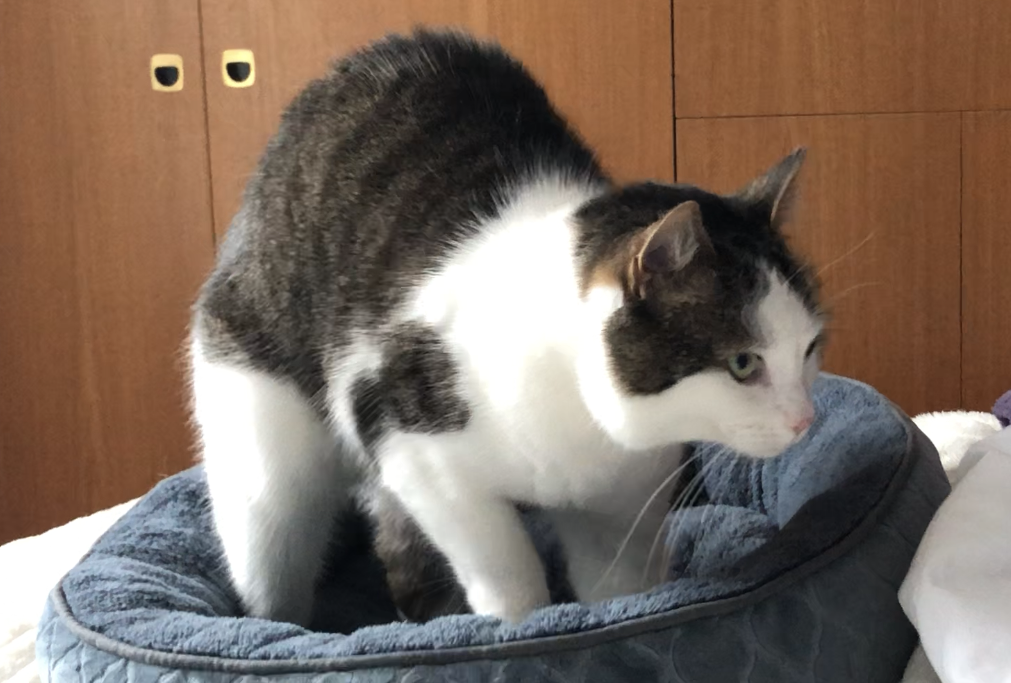
Why do cats knead? Discover the science and instincts behind this comforting feline behaviour—and what it means when your cat kneads you.
What Is Cat Kneading?
If you’ve ever watched your cat rhythmically press their paws into your lap, a blanket, or if you’re especially “lucky” then your stomach at 6 a.m. (like some of mine insist on!), you’ve witnessed cat kneading. Some people call it “making biscuits,” and honestly, once you’ve felt your cat’s little paws working away like a miniature baker, it’s hard to unsee it. (And unfeel it! )
But kneading isn’t just a quirky, feline habit. It’s a deeply rooted, instinctive behaviour tied to comfort, bonding, communication, and early development.
It’s a cute behaviour with surprisingly scientific roots.
Why Do Cats Knead?
Cats begin kneading as newborns. When kittens nurse, they push their paws against their mother’s belly to:
- stimulate milk flow
- anchor themselves while feeding
- create feelings of warmth and security
These early sensations become emotionally hardwired, which is why many adult cats continue kneading long after they’ve left kittenhood behind.
In fact, as I am typing this this, my 3-year-old, Sebastian, is enthusiastically kneading a blanket beside me, purring so loudly he could probably power a small appliance. He’s alternating between kneading, head-butting my hand, and communicating very clearly: Heyho! Love me. Scratch me. Feed me. In that order.
Is there anything more adorable than that?
Do Adult Cats Grow Out of Kneading?
The short answer is: nope.
Some cats knead less with age, but most continue the habit in adulthood. Kneading can signal that a cat is:
- relaxed
- feeling affectionate
- seeking attention
- preparing to rest
- showing trust in you
My oldest cat, Jasper, is a lifelong kneader and (bonus!) an enthusiastic drooler. He insists on kneading my belly in the morning and my feet at night. I can only assume these are two separate biscuit recipes.
Do Wild Cats Knead Too?
Surprisingly, yes. Although kneading is most noticeable in domestic cats, kneading-like behaviour has been seen in several wild species, including:
- bobcats
- cheetahs
- African wildcats
- lions (especially juveniles)
In wild felines, kneading is associated with:
- nesting: patting down grass before resting
- stretching: working leg and shoulder muscles
- comfort behaviours: especially in young or captive cats
- scent marking: since paw pads contain scent glands
So while your cat may act like they’re preparing a hard-to-master sourdough recipe, scientists would argue that the kneading behaviour in our feline friends likely dates back thousands of years.
Why Does My Cat Knead Me?
If your cat chooses you as their preferred kneading surface, congratulations: you’re officially in their emotional “safe zone.” It’s their way of paying you a furry compliment.
We think that cats knead humans because:
- your scent and presence comfort them
- they associate you with warmth and safety
- they’re bonding with you
- they want affection (or food—let’s be honest)
- they’re marking you as “theirs” via scent glands
Cats don’t knead just anyone. If you’re selected, it’s a sign of genuine trust.
Kneading and Purring: A Combo That Means Cat Bliss
When kneading comes with deep purring, half-closed eyes, relaxed whiskers, and maybe even drool, your cat is basically saying: I am happy, safe, and deeply content. It’s one of a cat’s most expressive comfort signals.
How to Manage Kneading (Especially When Claws Are Out)
Kneading is natural and healthy, but sometimes it feels like your cat is massaging you with tiny knives. Instead of discouraging it, first remember that this is natural, positive behaviour. However endearing the intention of this gesture may be, if you’re not exactly in the mood for a spontaneous acupuncture treatment, try:
- placing a thick blanket on your lap
- offering a plush “kneading pillow”
- keeping claws trimmed
- gently redirecting your cat if it hurts
- avoiding punishment (I would argue punishment is never a good idea, even with misbehaviour)
Fluffy isn’t trying to hurt you. He’s just expressing affection with sharp enthusiasm.
Should You Ever Be Concerned About Kneading?
Most of the time, kneading is a great sign. But sudden changes can indicate:
- stress
- pain
- new anxiety triggers
- environmental changes
- self-soothing from discomfort
If kneading becomes excessive or out of character, just like with sudden physical changes (e.g. vomiting), sudden behavioural changes can indicate a problem as well. (Ditto with purring, as it also can occur when a cat is stressed or in pain.) In this case, it’s best to start with a vet check and then evaluate anything recent that might have unsettled your cat.
Remember: Kneading Is Your Cat’s Love Language
Kneading is one of the clearest windows into a cat’s emotional world. Whether they’re recreating kittenhood comfort, marking territory, bonding, or getting ready for a nap, kneading expresses their natural instincts and affection.
By understanding and embracing this behaviour, you’re strengthening your bond, one biscuit at a time.
——————————————————–
SOURCES
Bradshaw, J. W. S. (2013). Cat Sense: How the New Feline Science Can Make You a Better Friend to Your Pet. Basic Books.
Kappel, I., Riedel, M.-C., Becker, F., Hicks, S., Warlich-Zach, N., & Ganslosser, U. (2024). Ethogram of the Domestic Cat. Pets, 1(3), 284–314. https://doi.org/10.3390/pets1030021
Turner, D. C., & Bateson, P. (Eds.). (2000). The Domestic Cat: The Biology of Its Behaviour (2nd ed.). Cambridge University Press.
Vitale, K. R., Behnke, A. C., & Udell, M. A. R. (2022). Conspecific and Human Sociality in the Domestic Cat. Frontiers in Veterinary Science, 9.