
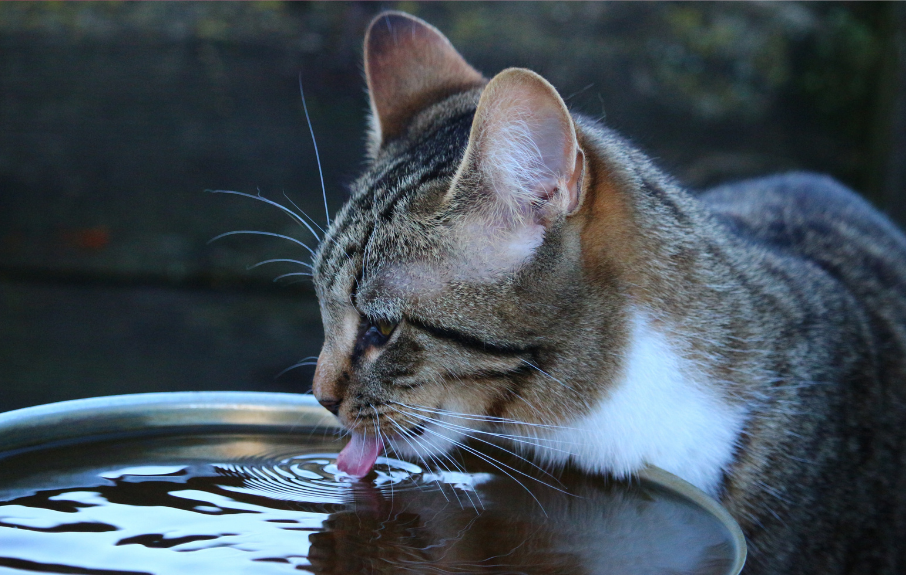
Last week my hairdresser asked me about cats and water.
“What is the deal with my cat? I’ve tried bowls, I’ve tried a fountain, but he insists on drinking from the tap. He will literally sit in front of the sink, stare at the spout, and yell at me until I turn it on.”
If you live with a cat, this story may feel pretty familiar. Many of us have, at some point, found ourselves obediently turning on a faucet for a small, demanding creature who could very well drink perfectly good water from a bowl two feet away. One that we picked out carefully, at the store to make sure it wasn’t too deep (for his highness’ whiskers), it was made of ceramics (to prevent offensive odours), and pleasing to the eye (ok, that one’s for us!).
So what is the deal?
As it turns out, the answer is both simpler and more interesting than you might expect. Cats are not being difficult for the sake of it. They are, in their own slightly dramatic way, revealing something important about how they drink, how they evolved, and why hydration is one of the most overlooked parts of feline health.
Why Water Matters More Than We Think
Let’s start with the part that actually matters: getting enough water into your baby.
From a medical perspective, hydration is not a minor detail. It is central to preventing some of the most common and frustrating feline diseases, particularly those involving the urinary tract. When cats take in more water, they produce more dilute urine. That means fewer crystals, less irritation in the bladder, and a lower risk of conditions like feline idiopathic cystitis and urinary stones. In cats with kidney disease, maintaining hydration becomes even more critical, often forming a cornerstone of long-term management.
Keeping your kitty hydrated is, in other words, not about preferences or quirks. It is about feline physiology.
Why Cats Aren’t Big Drinkers
Here is where things get slightly inconvenient: as all cat owners know, cats are not naturally enthusiastic drinkers. Not like dogs or other pet family members.
Cats evolved as desert-adapted hunters, designed to obtain most of their water from prey. Did you know, for example, that a mouse is about 70–80 percent water?! Dry kibble, by contrast, contains only roughly 10 percent. So cats eating dry diets tend to drink more than those eating wet food, but, unfortunately, usually not enough to fully make up the difference. Over time, that gap can matter.
The Biggest Hydration Tool Isn’t the Water Bowl
So if there is one “big lever” for keeping fluffy hydrated, it’s not a question of the bowl, the fountain, or the tap. It is more an issue of the food source.
Wet diets dramatically increase total water intake in a way that no drinking strategy, including the occasional tap binge, quite matches.
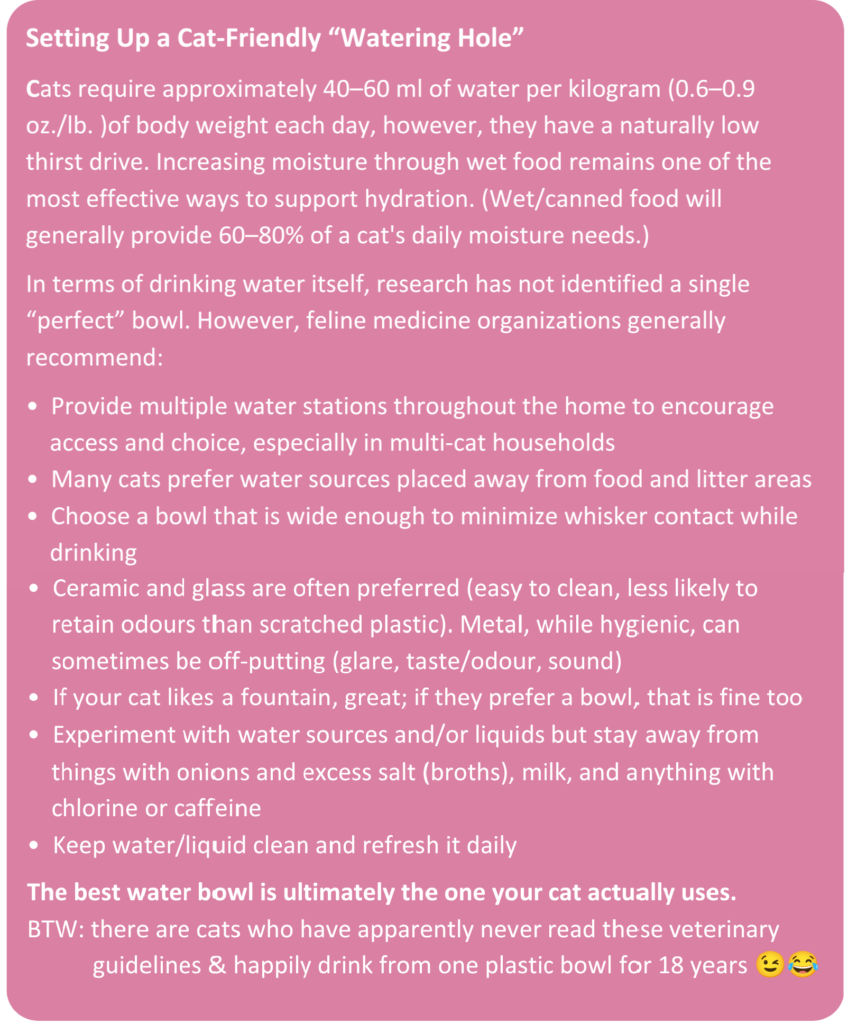
That said, most cats still need to drink at least some water. And this is where things get interesting, because despite the endless debate among cat owners, there is no single perfect solution. Bowls versus fountains, ceramic versus stainless steel, still versus flowing water: the research does not point to a universal winner.
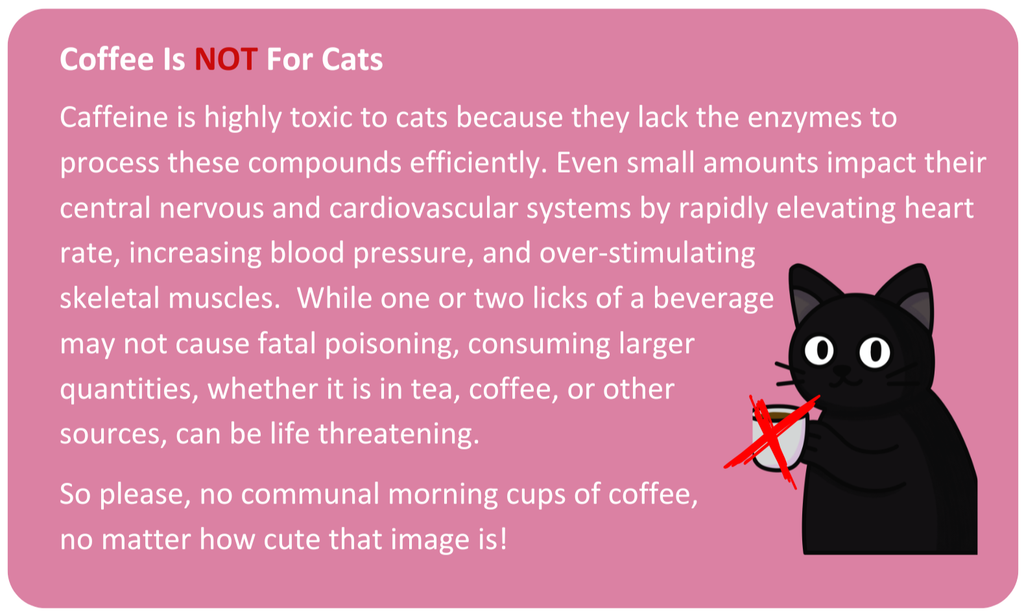
Some cats drink more from fountains, some ignore them completely, and others develop very specific, slightly baffling preferences. The same cat that refuses a pristine bowl may happily drink from a dripping tap or a half-forgotten glass on your nightstand. (Substitute my morning coffee, and yeah, that’s been attempted in my house on more than one occasion! Please read the sidebar for this, because CAFFEINE is NOT FOR CATS!)
Why Cats Develop Such Strange Drinking Preferences
So to answer my hairdresser’s question: no, her cat is not broken. He is just being a cat.
Many owners assume cats prefer running water because it is somehow hard-wired into them. The reality is a little less certain, and a little more interesting. Flowing water may appeal because movement makes it easier to notice and may serve as a cue associated with freshness. Many cat owners find that fountains increase drinking, although studies suggest responses vary considerably between individual cats.
Beyond that, individual preference plays a huge role. Cats are remarkably sensitive to subtle factors: the width of the bowl (whisker contact matters), the location, the height, even how “interesting” the water appears.
Which brings us to a more surprising piece of research: it may not just be about what the water looks like, but how it behaves.
The Physics of Drinking
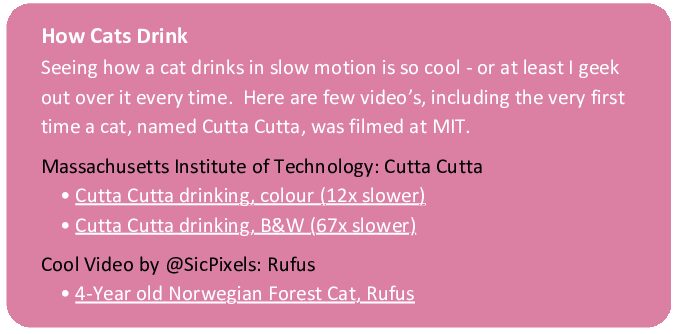
Cats do not drink like dogs. They do not scoop water. Instead, they perform a delicate balancing act between inertia and gravity, flicking the tip of their tongue to pull up a column of liquid before snapping their jaws shut at just the right moment. It is a precise, rapid, and totally cool process to watch.
If you have never actually seen how a cat drinks in slow motion, it is worth taking a look. The process happens so quickly that it is almost impossible to appreciate with the naked eye. These videos reveal the remarkable tongue mechanics that inspired much of the research described above.
Does Thicker Water Help?
This is where viscosity – or how a liquid flows and behaves – enters the story.
Emerging research suggests that slightly thicker liquids can actually increase water intake. The idea is that more viscous fluids are easier for cats to “capture” with each lap, making drinking more efficient.
It is not something you need to engineer in your kitchen, but it does help explain why certain liquids, like broth, enhanced waters, or even milk or cream, can be so appealing.
Flavour Matters
And this brings up another issue. Yup, you got it—flavour matters too!
Studies have shown that cats will drink more when water is flavoured or nutrient-enriched, particularly with meat-based profiles like poultry or tuna. This aligns with what many owners already do intuitively: adding a splash of tuna water or offering a bit of low-sodium broth. Used sensibly, these can be effective tools, especially for cats that are otherwise reluctant to drink.
Does Feeding Frequency Matter?
Another issue that has been studied is feeding frequency. Does offering smaller, more frequent meals make cats drink more? The answer is: not significantly, or at least not directly.
Feeding patterns may influence activity and routine, but they are far less important than what is actually in the bowl. Again, moisture content wins.
Age, Health, and Individual Preference
Age and health status also make a difference. Older cats, and particularly those with kidney disease or urinary issues, often need more careful hydration support. Some may drink more, others less. Some develop strong preferences that are worth accommodating rather than fighting.
Which brings us back to the original question: bowls, fountains, or taps?
So What’s the Best Water Source?
The unsatisfying but honest answer is that there is no single best option.
While there are some things that hold true for all cats, in the end they are, like people, unique, and so have their own preferences. The “right” choice is the one your cat will use consistently. For one cat, that might be a sleek fountain in a quiet corner. For another, it is the bathroom sink, turned on at precisely the correct angle, under direct human supervision. And, by the way, it can change over time. Some of my cats, for example, have vacillated from fountains to bowls and back to fountains again. And yes, one of them was also an avid tap drinker. (In fact, she loved to hang out in the sink, period. J)
If there is a unifying principle, it is this: focus less on the container and more on the outcome. Offer multiple water sources. Experiment with placement and style. Consider adding moisture through diet. Use flavour strategically if needed. Pay attention to what your individual cat (or cats) actually does, rather than what they are supposed to prefer. And if that means occasionally turning on the tap for a demanding audience of one, that is okay.
The goal is not to win an argument about bowls versus fountains.
The goal is hydration.
Whether that water comes from a ceramic bowl, a fancy fountain, or a carefully supervised bathroom faucet matters far less than the simple fact that your cat is drinking it.
As for who is training whom?
Well, that remains an open question.
_________________________________________
SOURCES
Drinking Behavior and Mechanics
Grant, D. C. (2010). Effect of water source on intake and urine concentration in healthy cats. Journal of Feline Medicine and Surgery, 12, 431–434.
Reis, P. M., Jung, S., Aristoff, J. M., & Stocker, R. (2010). How cats lap: Water uptake by Felis catus. Science, 330, 1231–1234.
Diet and Water Intake
Carciofi, A. C., Bazolli, R. S., Zanni, A., Lanzoni, L., & Prada, F. (2005). Influence of water content and diet digestibility on water balance in cats. Brazilian Journal of Veterinary Research and Animal Science, 42, 429–434.
Hawthorne, A. J., & Markwell, P. J. (2004). Dietary sodium promotes increased water intake and urine volume in cats. Journal of Nutrition, 134(Suppl), 2128S–2129S.
Kosmal, P. A. L., Shoveller, A. K., Gillies, G., & Armstrong, L. E. (2025). Diet format, nutrients, and water properties affect water intake and hydration in domestic cats: A scoping review. Journal of Animal Science, 104.
Enhancing Water Intake (Palatability and Viscosity)
Hall, J. A., Vanchina, M. A., Ogleby, B., & Jewell, D. E. (2021). Increased water viscosity enhances water intake and reduces risk of calcium oxalate stone formation in cats. Animals, 11.
Peralta, M., Nichelason, A. E., & Trepanier, L. A. (2025). Voluntary acceptance of nutrient-enriched water and promotion of water intake in dehydrated cats. Journal of Feline Medicine and Surgery, 27.
Zanghi, B. M., Gerheart, L., & Gardner, C. L. (2018). Effects of a nutrient-enriched water on water intake and hydration indices in cats. American Journal of Veterinary Research, 79(7), 733–744.
Zanghi, B. M., Wils-Plotz, E., DeGeer, S., & Gardner, C. L. (2018). Effects of a nutrient-enriched water with and without poultry flavoring on water intake and hydration in cats fed a dry diet. American Journal of Veterinary Research, 79(11), 1150–1159.
Feeding Patterns and Behavior
Kirschvink, N., Lhoest, E., Leemans, J., Delvaux, F., Istasse, L., Gustin, P., & Diez, M. (2005). Effects of feeding frequency on water intake in cats. Journal of Veterinary Internal Medicine.
Hydration and Health Outcomes
Buckley, C. M. F., Hawthorne, A., Colyer, A., & Stevenson, A. E. (2011). Effect of dietary water intake on urinary output and relative supersaturation in cats. British Journal of Nutrition, 106(S1), S128–S130.
He, C., Fan, K. J., Hao, Z., Tang, N., Li, G., & Wang, S. (2022). Feline idiopathic cystitis: Risk factors, pathophysiology, and management. Frontiers in Veterinary Science, 9.
Sparkes, A. H., Caney, S., Chalhoub, S., Elliott, J., Finch, N., Gajanayake, I., Langston, C., Lefebvre, H., White, J. D., & Quimby, J. (2016). ISFM consensus guidelines on the diagnosis and management of feline chronic kidney disease. Journal of Feline Medicine and Surgery, 18, 219–239.