
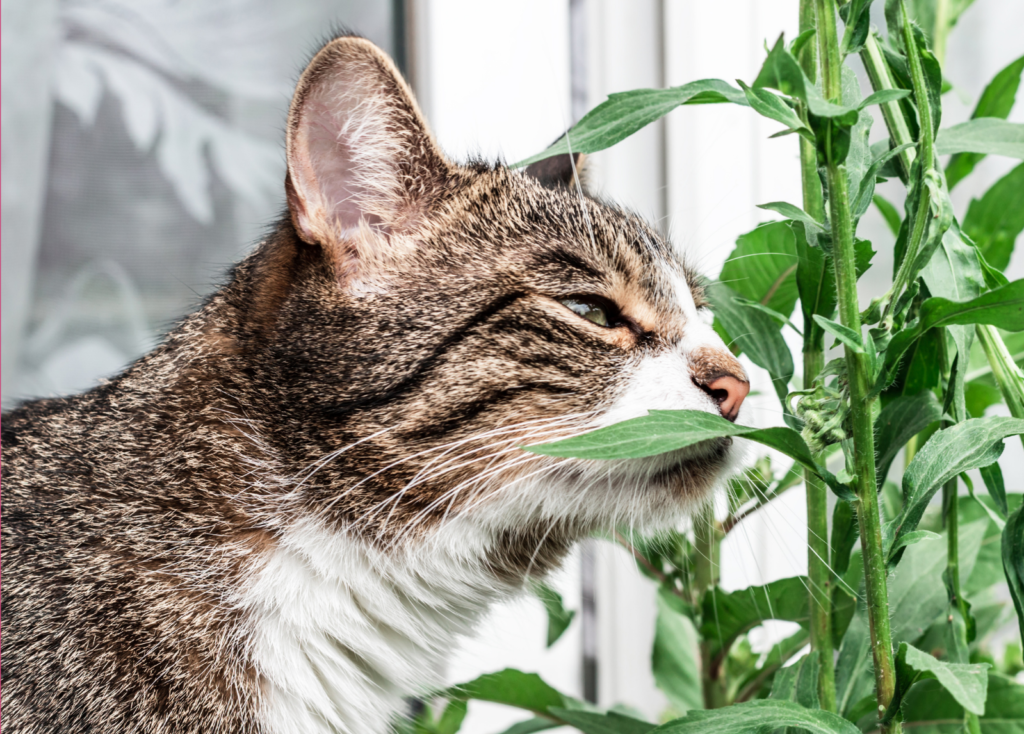
Cat owners get it: our feline furballs aren’t aloof loners. They chatter at birds through the glass, pull that weird stink-face mid-sniff, or hit us with a slow blink that feels like they’re in on the secret. Living so close to them, you’d think we’d speak the same language by now… but most of us don’t. We have moments when we hesitate and wonder what is Fluffy really trying to tell me when she does that?! Because you know that these moves aren’t random quirks; they’re her way of sharing what’s going on inside, from frustration to full trust.
Well, here are five behaviours – plus one extra I just couldn’t resist – backed by research, and what they tell you if you know how to listen.
1. That Chattering Frenzy at the Window
Picture this: your cat freezes at the window, eyes locked on a squirrel that’s just out of pouncing range. Then comes the chatter – those staccato bleats like a tiny goat with a grudge.
Science says it’s a hunting reflex gone frustrated. The rapid jaw chomps and vocal bursts mimic the killing bite cats use on prey, firing off predator signals with no outlet. Studies link it to prey-drive overload, especially in indoor cats whose natural hunting (or play) needs aren’t met. It’s less “yay, fun!” and more “dang it, so close!”
A dog owner would never skip walking their dog at least once a day. Cats need their version of enrichment too: a walk on a harness outside, or a daily indoor play session mimicking the stalk-chase-pounce sequence. Even a short session can make a huge difference! It helps to reduce pent-up energy, cutting the 3 a.m. zoomies, easing multi-cat spats, and keeping the claws off your ankles. Try it! Your kitty’s inner lion…er, house panther…will thank you.
2. The Dramatic Stink-Face (Flehmen Response)
You know the look: mouth agape, lip slightly curled, eyes wide like you’ve betrayed them with your cooking. Relax, your kitty is not judging. He’s just on a reconnaissance mission.
You see, cats have a vomeronasal (Jacobson’s) organ in the roof of their mouth that analyzes pheromones (social and chemical info layered on top of ordinary smells). Pheromones tell your cat about his territory, moods, mating status and who’s been where, and how recently. The grimace pumps air straight in, helping to decode a whole world of scent that we as humans completely miss. Brought in a new cleaner? Have guests in the house? A different piece of furniture? That’s a full rewrite of their territory’s safety map which they have to absorb and come to terms with.
So the next time you spot your cat pulling that face, he’s not taking offense. He’s gathering intel and recalibrating. And sometimes, that intel determines whether he relaxes… or starts peeing somewhere deeply inconvenient.
(If that happens, offering familiar scents or creating some extra safe hides or adding a raised perch can return harmony and bliss to your home.)
3. Slow Blinks: The Ultimate Trust Signal
Ever notice your cat holding your gaze, then slowly closing her eyes? She’s not ignoring you. It also isn’t submission, and it probably isn’t only the cat equivalent of professing eternal love either. Research shows slow blinks signal safety and comfort, not just affection. Your kitty is actually displaying vulnerability and telling you “I don’t see you as a threat. I’m comfortable enough to let my guard down.”
And this is one of the rare moments where humans can learn to speak “fluent cat” back.
Try it next time: soft eyes, an unhurried close, and then look away. Studies confirm it lowers stress in shy or new cats, building bonds without touch, treats or a bouquet of catnip ;). It communicates calm, non-threatening intent in a language your cat already understands, building trust without pressure.
4. Purring Isn’t Always “Happy”
Then there is the lap purr. You know what I mean: your warm love-muffin is happily curled up on your lap, accepting a lavish massage and rubs of affection. Pure bliss.
But is it?
Well, in this instance it probably is J. However, cats also purr when stressed, injured, birthing, or dying. Scientists believe it may be a form of self-soothing, because the purr frequencies are around 25-150 Hz, which are frequencies that aid in bone density maintenance and tissue repair. It seems it’s not just an expression of positive emotions but also a physiological coping mechanism, and these “tense” purrs tend to sound raspier than those don’t-stop-rubbing-me purrs. From my own experience I completely concur: one of my cats purred through her terminal cancer, steadying her failing body with a much deeper frequency.
If you are not completely sure about whether you are hearing a happy or coping purr, another way to decode it is by adding in the context. If she’s comfy and purring next to you – or snuggled on your head at three in the morning – she’s probably just enjoying being close to you. Totally normal. But when you’re uncertain, ask yourself if your cat’s behaviour has changed. For example, a she hiding in her perch more than usual? Her purring may not automatically be a happy purr. The thing here is to be aware of any subtle changes and try to listen in closely. When something feels a bit off, like appetite, posture, excessive hiding the context combined with the sound of the purr can tell you a lot.
5. No Dominance, Just Scent Families
Forget old myths of cat hierarchies. Modern animal behaviour science has largely walked back classic dominance theory, even in dogs and wolves. With cats, ethology shows that they tend more to form “scent families” or bonded pairs/groups via rubbing, grooming, and shared spots. If you smell like “us”, you’re in the clique.
That’s why it’s so important to scent share things like cat beds or blankets before physically introducing a new cat to others in your home. Think of it like allowing your resident cat(s) to vet and approve the newcomer online before officially adding him or her to the more intimate group chat. (And vice versa: allowing the applicant to get comfortable with the home clan.)
As for disagreements in multi-cat or multi-pet households? These usually aren’t personal grudges or diplomatic breakdowns. They’re more often than not resource wars: too few boxes, bowls, or perches. Add vertical space, extra beds, more bathrooms, or redistribute the resources in cat-logic layouts. Do that, and tensions can drop faster than any scolding. Fix the setup, not the fur ball.
6. (Bonus) The Butt-in-Your-Face Greeting
Few things test our love and dedication to the human-cat bond like waking up to your cat’s bum hovering inches from your face. It may be gross to us, but its positive social bonding to them. Why?
Well, cats identify one another primarily through scent, not facial features. The area under the tail contains powerful scent glands that communicate identity, group membership, and familiarity. Presenting that little hole is not about dominance – or an attempt to make you gag at 7 a.m. – it’s actually a display of trust.
Remember that next time you open your eyes to a butt hole. Resist pushing Fluffy away – it kills the moment J.
Instead enjoy the joyous good morning greeting. J No need to return the favour, though!
So there you have it folks: six fun feline behaviours. None of them flaws, just normal clear “cat talk” in a world geared to whiskers and paws. Decode them, respond right, and guesswork fades. Life with your little furr ball(s) becomes the easy chat it was meant to be.